Akagawa is also active as a railway photographer and journalist, providing photographs and writing for Japanese and British railway magazines and railway calendars
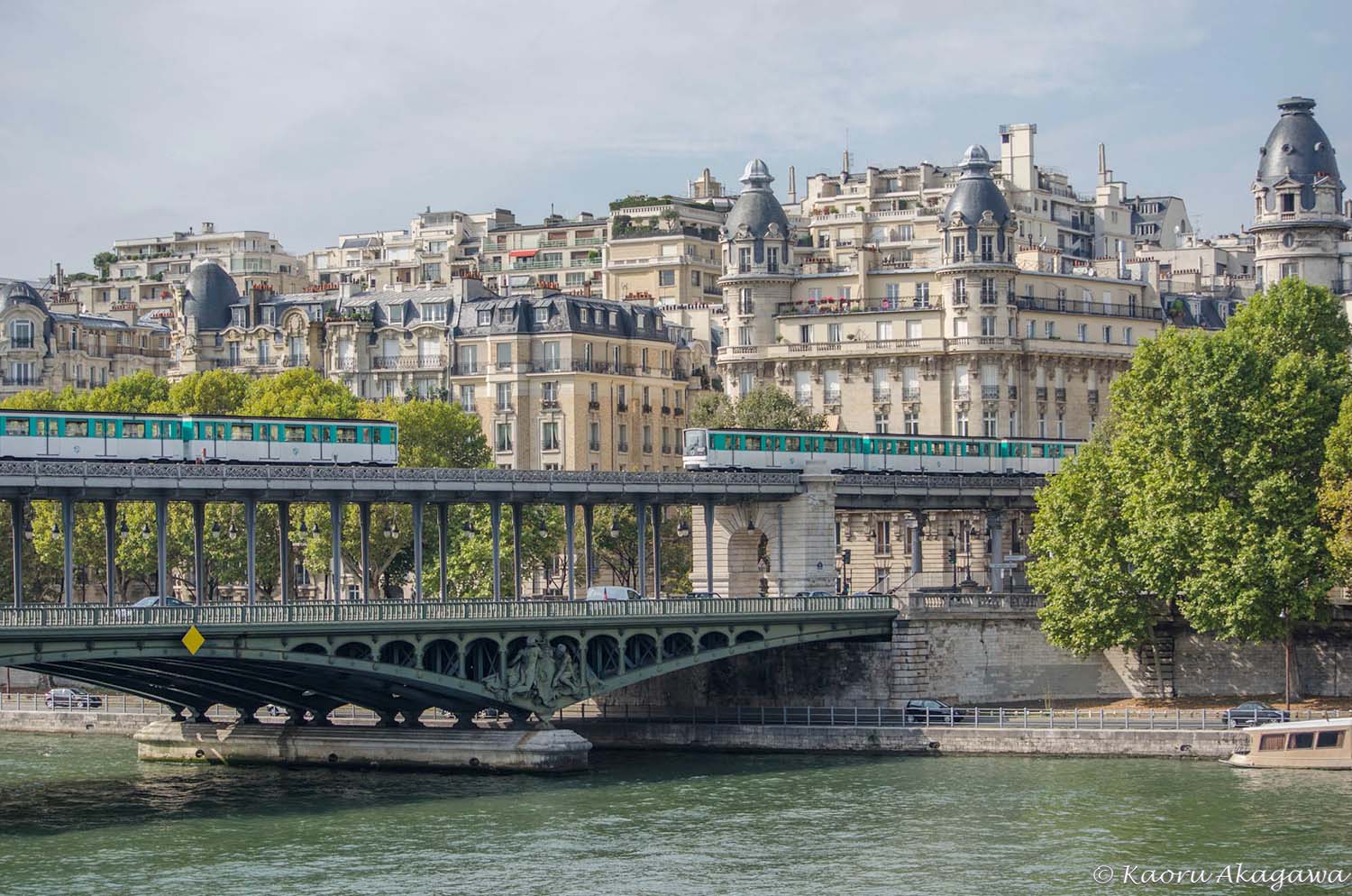 Anywhere that trains run, there is a society – a living, a breath, a life and a culture that people have built. Trains embody the culture of the country, town or village they run through. I am committed to capturing that culture through art.
Back in 2012, I was mentally ill. After several miscarriages, my life felt lonesome and empty. I couldn’t muster the energy to hold a brush or see my friends. In On Photography, writer and critic Susan Sontag wrote, “the very activity of taking pictures is soothing”. I became enthralled by the soothing effects of photography. I wanted to escape from everything in life that depressed me: the dismal memories of a slimy lump the size of an egg emerging from my body with each miscarriage; my unsympathetic husband; my parents forcing their values on me.
Diane Arbus, a photographer active in the 1960s, once described photography as “a licence to go wherever I wanted and to do what I wanted to do”. Perhaps I was subconsciously seeking permission to turn away from my life.
With a camera in my hand to guide me, I roamed the streets of Bratislava, the capital of Slovakia. With no prior knowledge, I took my first railway photograph – of an old Tatra tram.
I had never taken a good look at a tram before, but the moment the Tatra tram’s “face” came around the corner of a stone-paved street, I fell in love with its cute expression. Photography can elevate the ordinary and mundane into something beautiful and culturally valuable (Roland Barthes, Camera Lucida: Reflections on Photography). Sontag argued that this is similar to the Surrealists’ talent for discovering beauty in what others found ugly or uninteresting. Surrealists capture the human unconscious in art. Mesmerized by the beauty of train cars, I explored my own psyche through my camera’s viewfinder as I took train photos.
Train photography exhibits what Barthes termed the third surprise: technical prowess like that Harold D. Edgerton employed in capturing the coronet produced by a drop of milk. Unfortunately, I lacked prowess as I stood on that Bratislava sidewalk. While I took pictures absentmindedly, the Bratislava tram disappeared from sight in a flash, swaying like a centipede, making a skittering sound. Left behind, I realized that, for a few seconds, I had been mindless, free from the loneliness and sense of loss that had been eating away at me since my miscarriages.
The similarities between taking railway photographs and writing with a brush are probably one reason I took to railway photography as easily as I did. Sontag said, “To photograph is to appropriate the thing photographed. It means putting oneself into a certain relation to the world that feels like knowledge—and, therefore, like power.” This and other statements about photography remain as true if you, for example, replace the words “photograph” and “photographed” with “write” and “recorded”.
Moments of encounter between brush and paper are unique and fleeting; they can never be repeated. Similarly, when photographing railways, the meeting of weather and sun, birds, leaves and flowers, trains, cars and pedestrians in any given moment can never be repeated.
If you are currently going through a difficult time, I’d like you to try taking a picture of a train at your nearest station, even if just with your cell phone. Trains tend to be found anywhere people live, although the distance and frequency of their appearances may vary. In places where trains run frequently, you will be busy, and in places where trains are infrequent, the anticipation of their eventual arrival will help you lose track of time.
Copyright © 2010-2025 Kaoru Akagawa All Rights Reserved.